The Republic

Chapter I · Money

The Currency of the Republic

From cowries and the manilla, through the West African Pound, to the naira and its redesigns. Approval, withdrawal, and what each note could buy.

The physical record

Every currency that has circulated as money in this territory, from the Maldivian cowrie to the polymer naira. Each item is an archival illustration commissioned for this archive, not a photograph or scan — reproducing current legal tender is restricted, and the lettering here is deliberately illegible.

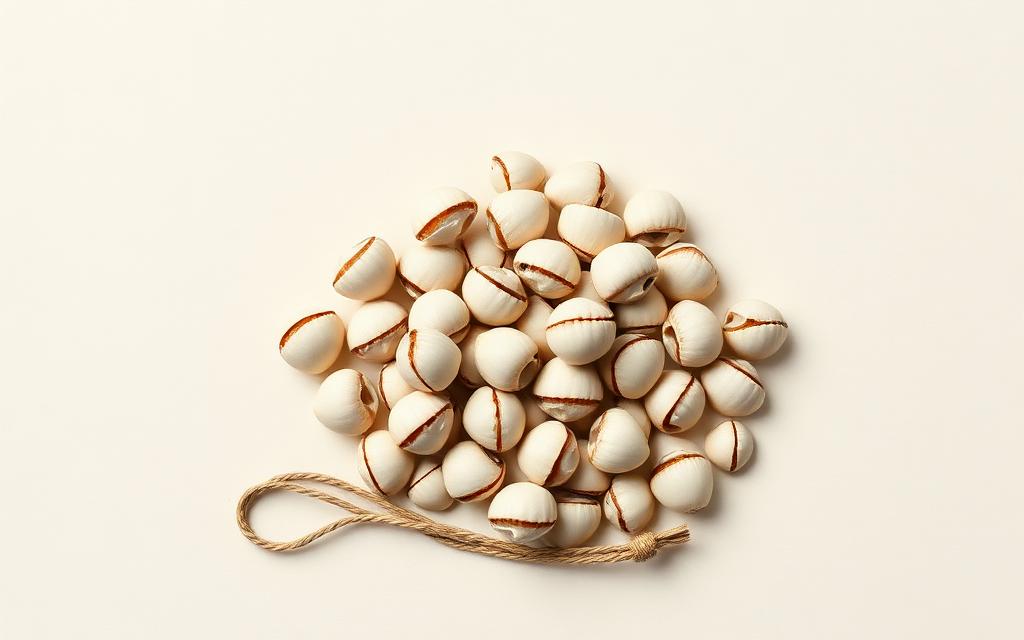
Archival illustration of Maldivian cowrie shells strung on raffia cord

16th century — demonetised 1880–1908

Cowrie shells

Cypraea moneta from the Maldives, shipped as ballast, strung in heads of forty and bags of twenty thousand.

What it bought
A prime slave at Bonny in the 1780s cost 12,000–16,000 shells; a tin of palm oil in the 1850s, 2,000.

Worth today
Extinguished by law, not by inflation — the only Nigerian currency ever abolished outright.

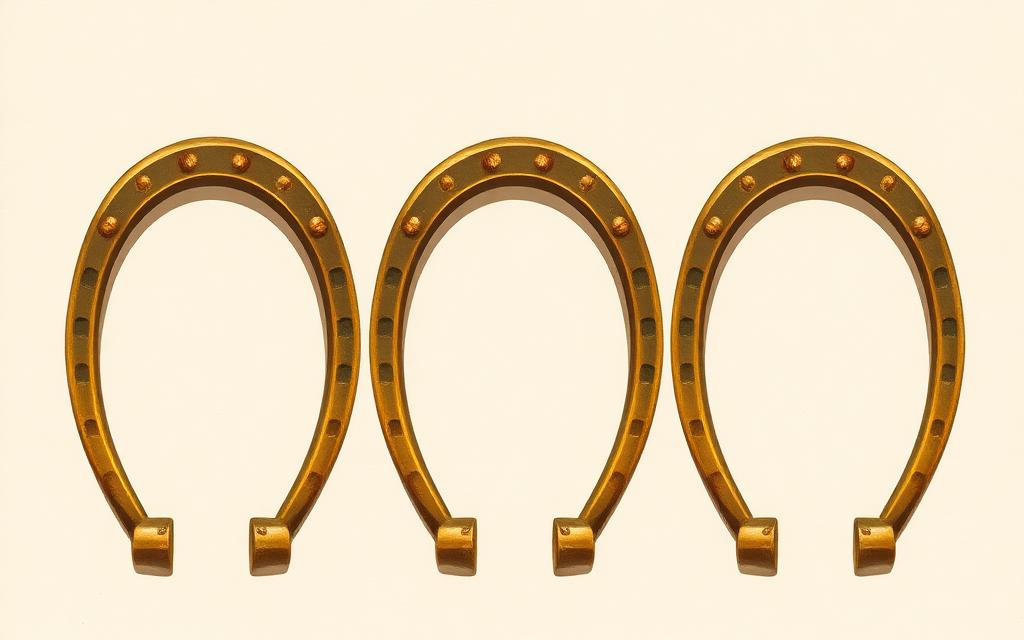
Archival illustration of three horseshoe-shaped brass manilla currency bracelets

16th century — withdrawn 1948–49

Brass manillas

Horseshoe-shaped brass rings cast in Birmingham and Nantes; six named types, each with its own market rate.

What it bought
Currency of the Niger Delta yam, salt and palm-oil trade for three centuries.

Worth today
32 million pieces bought back in Operation Manilla, 1948–49, at a fixed price below market.

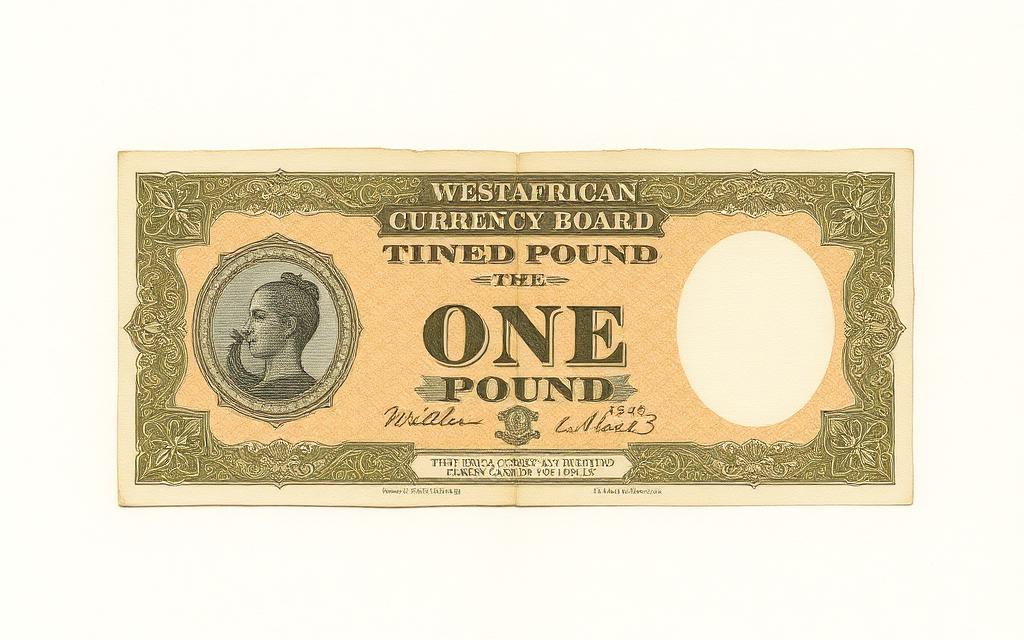
Archival illustration of a colonial West African Currency Board one pound banknote

6 November 1912 — 1959

West African pound

Notes and silver coin issued by the West African Currency Board in London, at full sterling parity.

What it bought
A labourer on the Lagos–Kano railway earned about £18 a year in 1914.

Worth today
£1 of 1914 ≈ ₦1.4m in 2026 money, taking Bank of England CPI to 1973 and Nigerian CPI after.

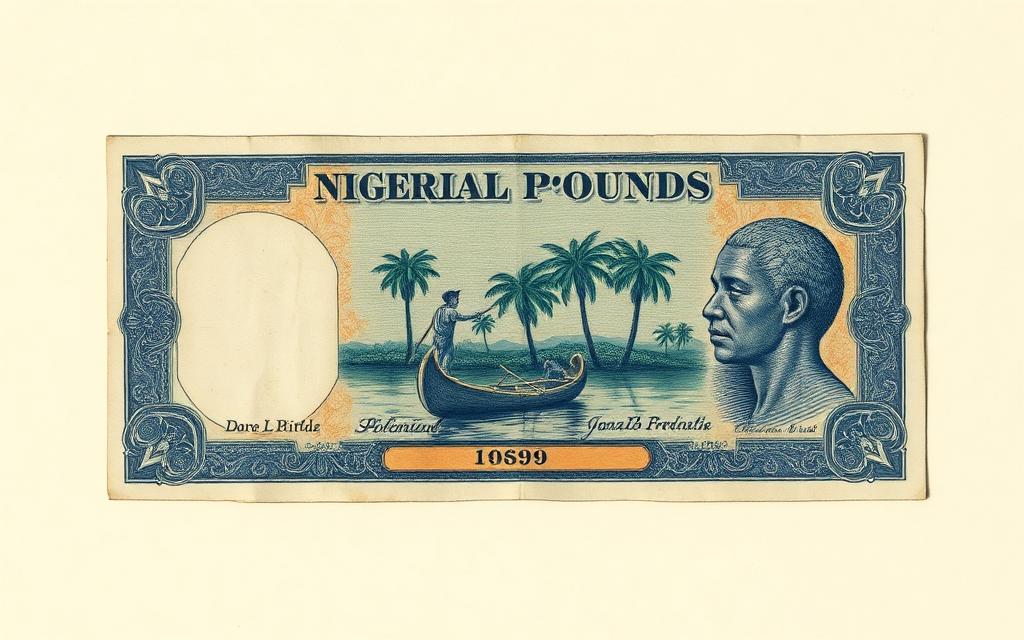
Archival illustration of a 1959 Nigerian pound banknote with a river canoe vignette

1 July 1959 — 31 December 1972

Nigerian pound

The first currency issued by the Central Bank of Nigeria, replacing the WACB pound at par.

What it bought
A new Volkswagen Beetle landed in Lagos in 1962 cost about ₤500.

Worth today
₤1 of 1959 ≈ ₦27,000 in 2026 money.

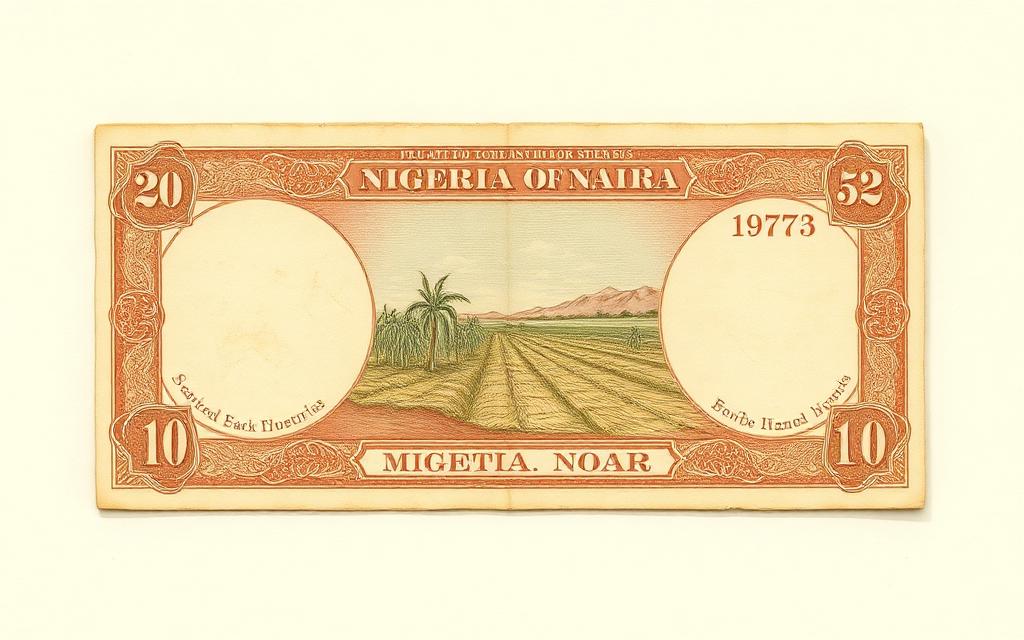
Archival illustration of a 1973 first-series Nigerian naira banknote

1 January 1973

The first naira

50k, ₦1, ₦5, ₦10 — decimal, agricultural motifs, and no Queen's head. Named by Awolowo, from 'Nigeria'.

What it bought
₦1 in 1973 bought roughly 16 litres of petrol, or twenty loaves of bread.

Worth today
₦1 of 1973 ≈ ₦7,010 in 2026 money.

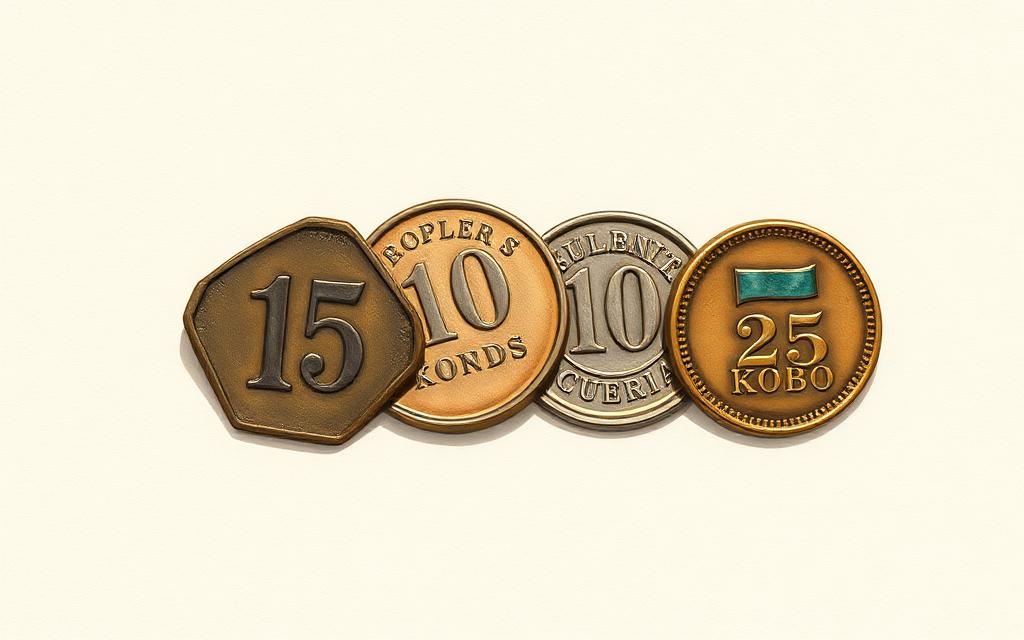
Archival illustration of a row of Nigerian kobo coins

1 January 1973 — effectively extinct

Kobo coins

½k, 1k, 5k, 10k and 25k, struck in bronze and cupro-nickel. 'Kobo' is the Hausa word for the British penny.

What it bought
5 kobo bought a bottle of soft drink in 1973.

Worth today
No kobo coin has circulated meaningfully since the mid-1990s. The unit survives only in accounting.

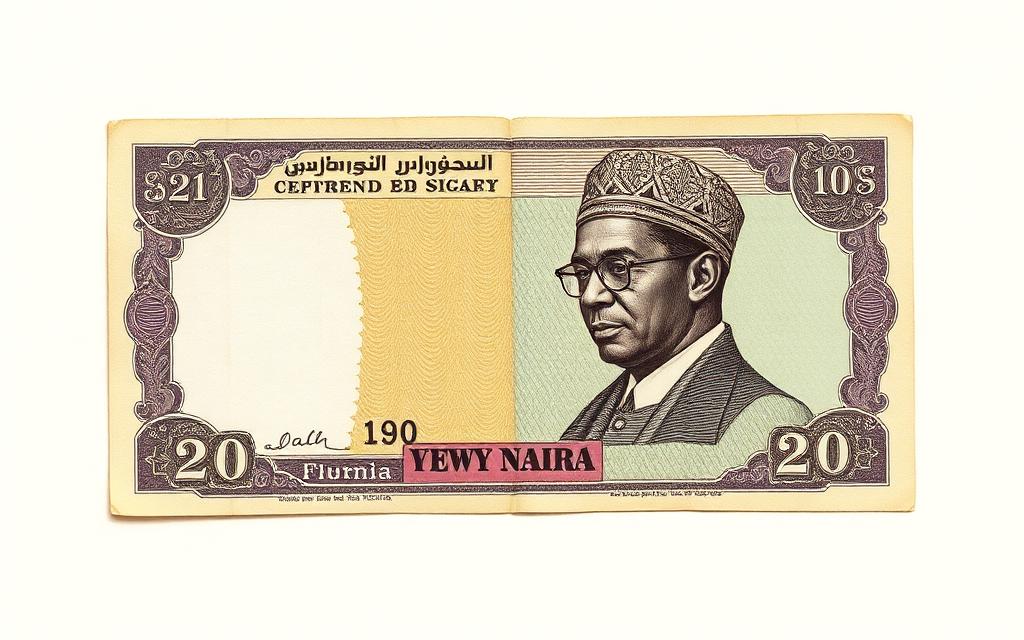
Archival illustration of a 1980s Nigerian twenty naira banknote

11 February 1977 series; ₦20 issued 1981

₦20

The first Nigerian note to carry a Nigerian face — Murtala Muhammed — and the highest denomination for a decade.

What it bought
₦20 in 1981 was about a week's wage for a junior clerk.

Worth today
₦20 of 1981 ≈ ₦38,000 in 2026 money.

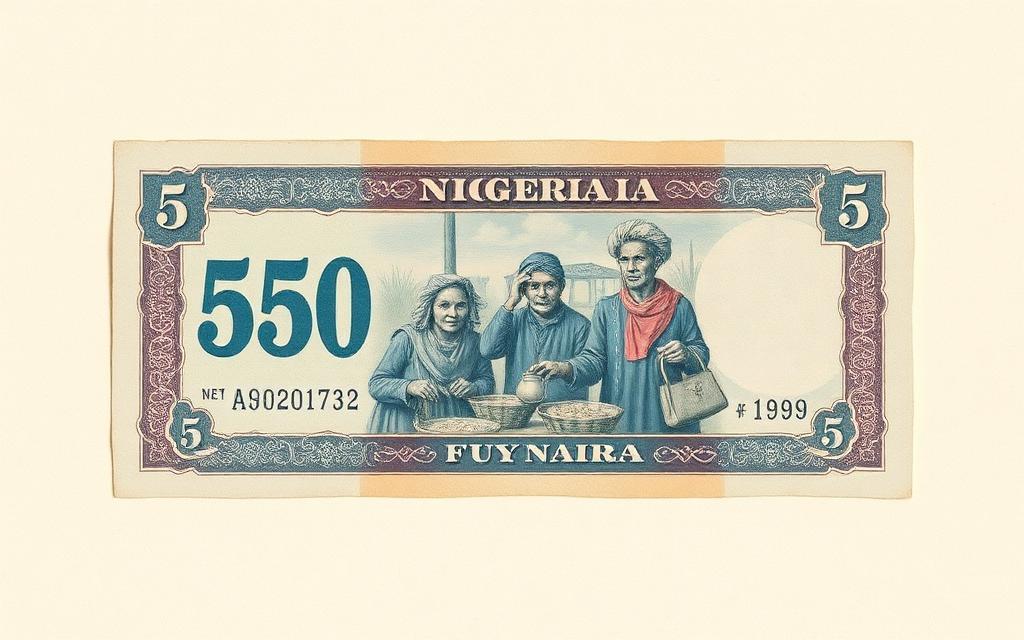
Archival illustration of a 1990s Nigerian fifty naira banknote showing four traders

2 December 1991

₦50

Issued the year 50k and ₦1 were demoted to coins — the first formal admission that the low end had died.

What it bought
₦50 in 1991 bought a 25kg bag of rice.

Worth today
₦50 of 1991 ≈ ₦17,800 in 2026 money.

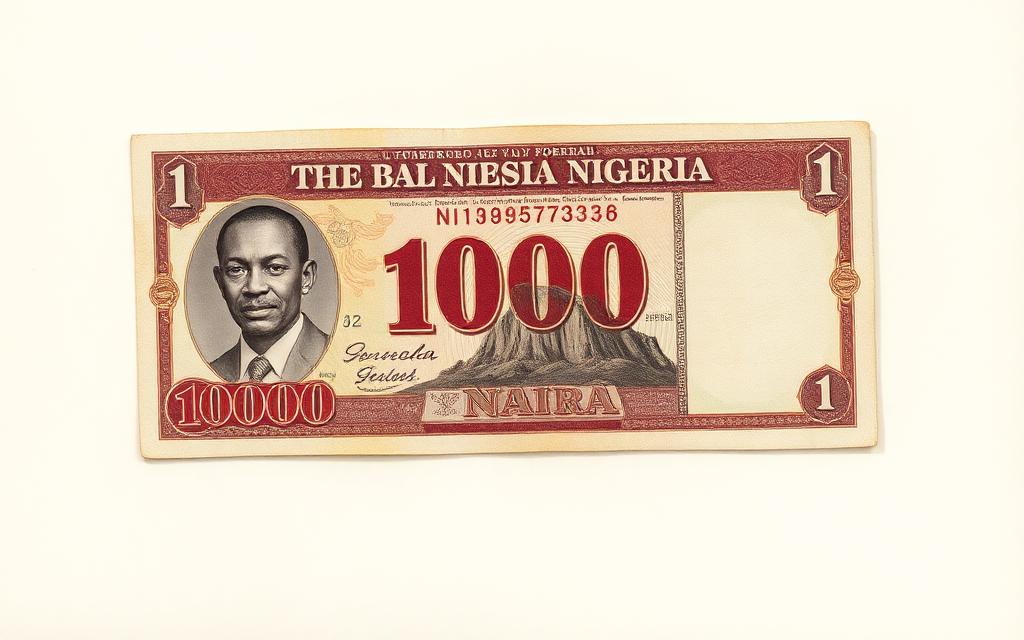
Archival illustration of a modern Nigerian one thousand naira banknote

12 October 2005

₦1,000

Aliyu Mai-Bornu and Clement Isong — the first two Nigerian Governors of the Central Bank — on the obverse.

What it bought
₦1,000 in 2005 filled a car's tank with 15 litres to spare.

Worth today
₦1,000 of 2005 ≈ ₦15,800 in 2026 money. It remains the largest note in circulation.

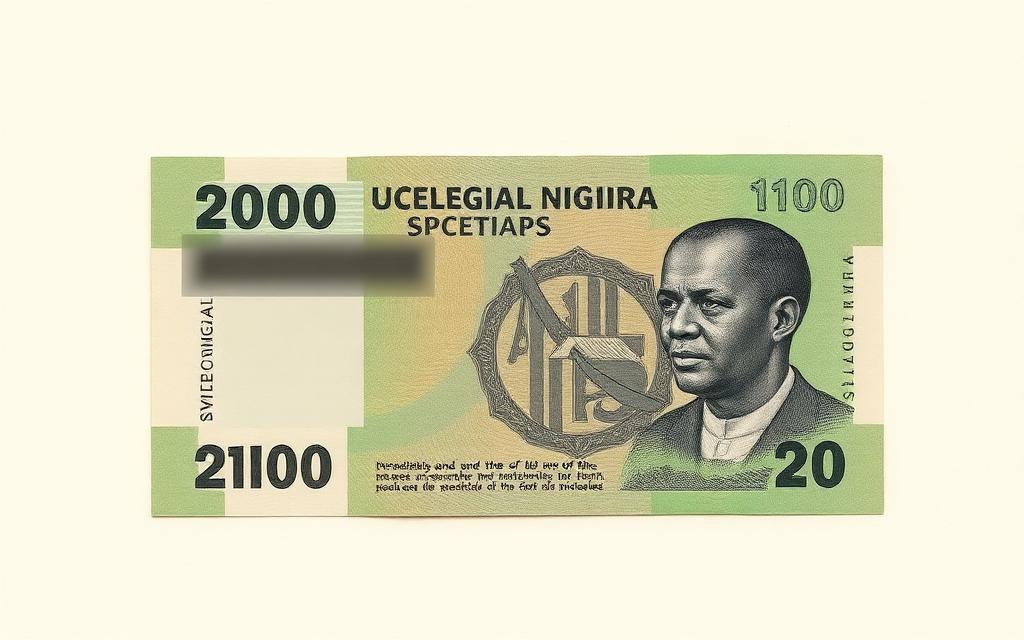
Archival illustration of a modern polymer Nigerian twenty naira banknote with a clear window

28 February 2007

Polymer series

₦5 to ₦50 reissued on polymer substrate for durability. The paper variants were withdrawn progressively.

What it bought
₦50 in 2007 bought a loaf of bread and change.

Worth today
The whole polymer range is now worth less than the cost of printing it.

Currency timeline

1900Pre-1912

Cowries, manillas, brass rods

Trade currencies of the pre-colonial period; the manilla used in the Niger Delta well into the 1940s. Their orchestrated collapse between 1845 and 1912 was the monetary conquest of Nigeria — see the Money record and How the currency fell before the flag.

Indigenous · demonetised 1880–1949

1912Colonial

West African Pound (£)

Administered by the West African Currency Board (Lagos). Sterling parity. Circulated in Nigeria, Ghana (Gold Coast), Sierra Leone, The Gambia.

£1 = 20s = 240d

1959Independence Eve

Nigerian Pound

CBN Act 1958 establishes the Central Bank. Nigerian Pound issued 1 July 1959, replacing WAP at par.

₤1 (Nigerian)

1973Decimal

The Naira (₦) and the Kobo (k)

Currency conversion 1 January 1973 under General Gowon. ₤1 = ₦2. Decimal kobo replaces shillings and pence.

₦2 = ₤1

1979First Redesign

New naira notes featuring nationalist figures

Notes redesigned to feature Tafawa Balewa, Azikiwe, Awolowo, Ahmadu Bello. ₦20 introduced — first ₦20 note ever.

5k–₦20

1984Demonetisation

Buhari naira redesign

Notes recoloured; old notes invalidated to combat illicit cash holdings. Borders closed during the exchange.

Buhari I

1991Coin Decimal

50k and ₦1 reissued as coins

Lower denominations re-minted as coins; ₦5, ₦10, ₦20, ₦50 introduced as paper.

Babangida

1999New Series

₦100 introduced

Centenary of the colony commemorated. Obafemi Awolowo on the obverse.

Obasanjo II

2001Higher Denom

₦200, ₦500 introduced

Inflation-driven; Sir Ahmadu Bello (₦200), Nnamdi Azikiwe (₦500).

Obasanjo II

2005Higher Denom

₦1,000 note introduced

Issued 12 October 2005. Aliyu Mai-Bornu and Clement Isong — the first two Nigerian CBN Governors.

Obasanjo II

2007Polymer

Polymer ₦5–₦50

Lower denominations re-issued in polymer for durability.

Yar'Adua

2022Redesign

Naira redesign: ₦200, ₦500, ₦1,000

Announced 26 October 2022 by CBN Governor Emefiele. Old notes initially deadline 31 January 2023; deadline contested at the Supreme Court (Feb 2023).

Buhari II

2023Supreme Court

AG Kaduna & Ors. v. AGF

Supreme Court 3 March 2023: old ₦200, ₦500, ₦1,000 to remain legal tender until 31 December 2023. CBN later extends indefinitely.

SC/CV/162/2023

Methodology

Tier 1 · primary

Courts. Gazettes. National archives.

Tier 2 · corroborating

OCCRP. HRW. BudgIT. TheCable.

Tier 4 · tertiary, flagged

Wikipedia only where primary is pending. Always labelled.