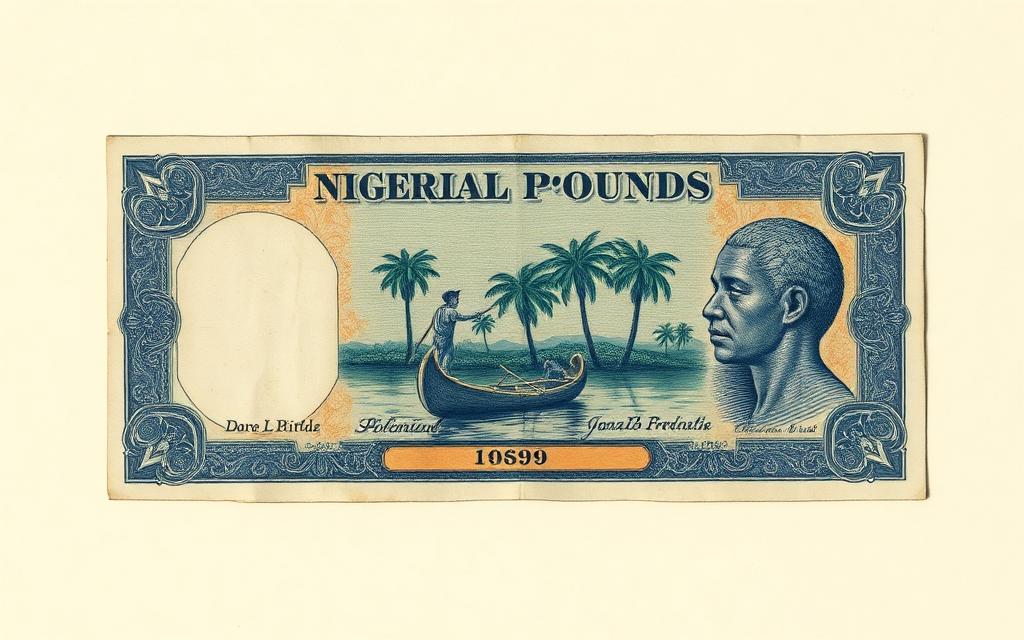
The Central Bank of Nigeria Act, 1958 (No. 24) established the CBN, which commenced operations on 1 July 1959 under the first Governor, Roy Pentelow Fenton. The Nigerian Pound replaced the West African Pound at par; the Mint at Igbosere Road, Lagos, opened in 1963.
Independence Eve1959· ₤1 (Nigerian)· Chapter I · Money
Nigerian Pound
CBN Act 1958 establishes the Central Bank. Nigerian Pound issued 1 July 1959, replacing WAP at par.
Sources
- · Central Bank of Nigeria Act 1958
- · CBN Bullion (50th Anniversary Edition, 2009)
What it cost — political & economic reality
The political and economic reality
Nigeria in 1959: who was in charge, the cabinet of the day, the GDP, and the crises that defined the period.
British colonial administration
Sir Frederick Lugard → Sir James Robertson
1900–1960
National reality
Amalgamation of the Northern and Southern Protectorates (1914) under indirect rule. Marketing boards extracted cocoa, palm oil and groundnut surpluses; political agitation built through the press and the trade union movement.
Crises of the period
- Aba Women's War (1929)
- Iva Valley shooting of striking miners (1949)
- Kano riots (1953)
GDP (World Bank)
Pre-independence; no national accounts series
Cabinet (selected portfolios)
Full ministerial roster being compiled.
Government administered by Governors-General and Residents. The first indigenous federal ministers were appointed under the 1954 Lyttelton Constitution.
Source: Toyin Falola, A History of Nigeria (CUP, 2008)
Tier 1 · primary
Courts. Gazettes. National archives.
Tier 2 · corroborating
OCCRP. HRW. BudgIT. TheCable.
Redline
Wikipedia is never a source.