Nigeria Law
Currency History

Colonial1912· £1 = 20s = 240d· Chapter I · Money

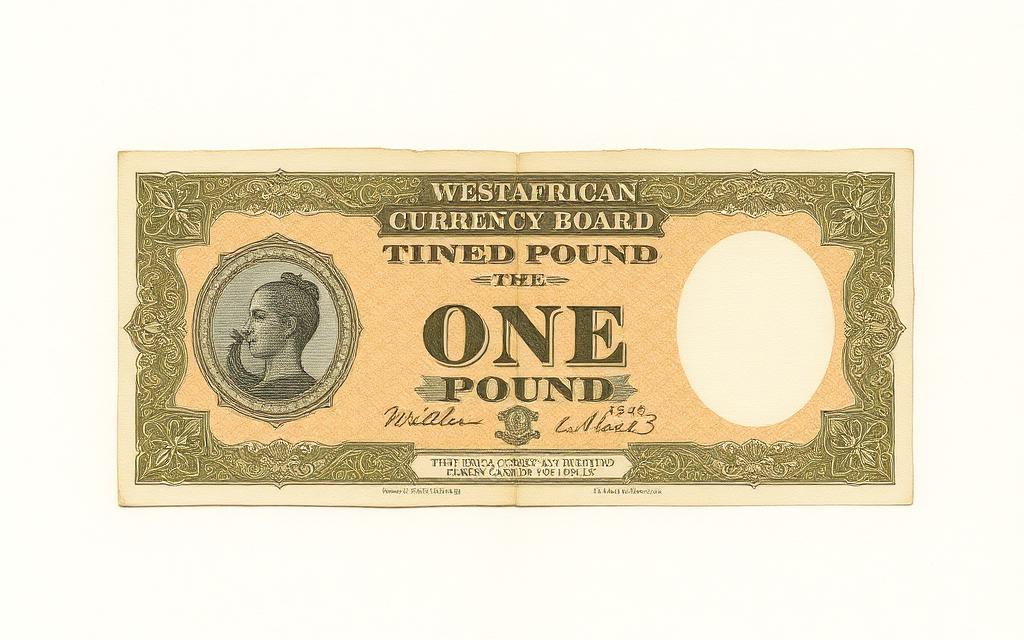
West African Pound (£)

Administered by the West African Currency Board (Lagos). Sterling parity. Circulated in Nigeria, Ghana (Gold Coast), Sierra Leone, The Gambia.

The West African Currency Board was established by the Colonial Office on 6 November 1912 and headquartered in London with a regional office in Lagos. WACB notes (£1, 10/-) and silver coins circulated across British West Africa at full sterling parity. The Board's reserves were held in London gilts.

Sources

  • · WACB Annual Reports 1913–1959 (UK National Archives)

What it cost — political & economic reality

The political and economic reality

Nigeria in 1912: who was in charge, the cabinet of the day, the GDP, and the crises that defined the period.

British colonial administration

Sir Frederick Lugard → Sir James Robertson

1900–1960

National reality

Amalgamation of the Northern and Southern Protectorates (1914) under indirect rule. Marketing boards extracted cocoa, palm oil and groundnut surpluses; political agitation built through the press and the trade union movement.

Crises of the period

  • Aba Women's War (1929)
  • Iva Valley shooting of striking miners (1949)
  • Kano riots (1953)

GDP (World Bank)

Pre-independence; no national accounts series

Cabinet (selected portfolios)

Full ministerial roster being compiled.

Government administered by Governors-General and Residents. The first indigenous federal ministers were appointed under the 1954 Lyttelton Constitution.

Source: Toyin Falola, A History of Nigeria (CUP, 2008)

Methodology

Tier 1 · primary

Courts. Gazettes. National archives.

Tier 2 · corroborating

OCCRP. HRW. BudgIT. TheCable.

Redline

Wikipedia is never a source.