The Naira's story is a fifty-year record of monetary collapse interrupted by three brief stabilisations (1974–1980, 1995–1998, 2005–2014), each ended by external shock and domestic policy failure. The headline numbers, taken from the CBN's own quarterly statistical bulletins:
- 1 Jan 1973 — Naira introduced at ₦0.658 per US$1.
- 1980 (oil-boom peak) — ₦0.546 per US$1; the Naira was briefly the strongest currency in West Africa, the basis of the legendary Nigerian shopping trips to London.
- 1986 (SAP) — Babangida's Second-Tier Foreign Exchange Market (SFEM) auctioned the Naira; it fell to ₦4 per US$1 within months.
- 1993 — ₦22 per US$1 at the end of the IBB era.
- 1995 — Abacha's Autonomous Foreign Exchange Market institutionalised a dual rate: official ₦22/$1, autonomous ₦82/$1.
- 1999 (Obasanjo returns) — official ₦92/$1.
- 2008 (peak oil, pre-crisis) — ₦117/$1.
- 2014 (pre-Buhari) — ₦165/$1.
- 2016 (oil crash + multiple windows) — ₦197 official, ₦490 parallel.
- 2020 (COVID) — ₦381 official, ₦485 parallel.
- 2022 (pre-Tinubu) — ₦461 official, ₦740 parallel.
- 14 June 2023 (Tinubu unification) — ₦750/$1.
- 29 Jan 2024 (second devaluation) — ₦1,450/$1.
- Dec 2024 — ₦1,700/$1.
Measured against the 1973 starting point, the Naira has lost about 99.96 percent of its dollar value over fifty-one years. Measured against gold, the depreciation is sharper still. Measured against rice — the practical inflation index for most Nigerian households — a 50 kg bag that cost ₦14 in 1980 cost ₦75,000 in October 2024, a 535,614-fold increase.
The policy debate has cycled four times between the same two camps. The fixed-rate camp (Buhari I, Buhari II 2015–2023) argued for managed exchange rates and import substitution; the result each time was rationing, parallel-market premia of 50–200 percent, and capital flight. The float-the-Naira camp (Babangida SAP, Obasanjo I, Tinubu) argued for market-determined rates; the result each time was sharp short-term devaluation, an inflation spike, and a temporary stabilisation followed by drift. Neither approach has produced sustained currency stability for more than about nine years at a stretch. See also Pound to Naira 1973, Structural Adjustment, Dutch Disease.
Figure 1
Naira / US-Dollar official rate, 1973–2025
From parity with the dollar at independence to ₦1,650 in 2024. Every governor inherited a stronger currency than he handed over.
The money itself
Archival illustrations commissioned for this archive — format, palette and motif of each issue, not a photograph or facsimile.
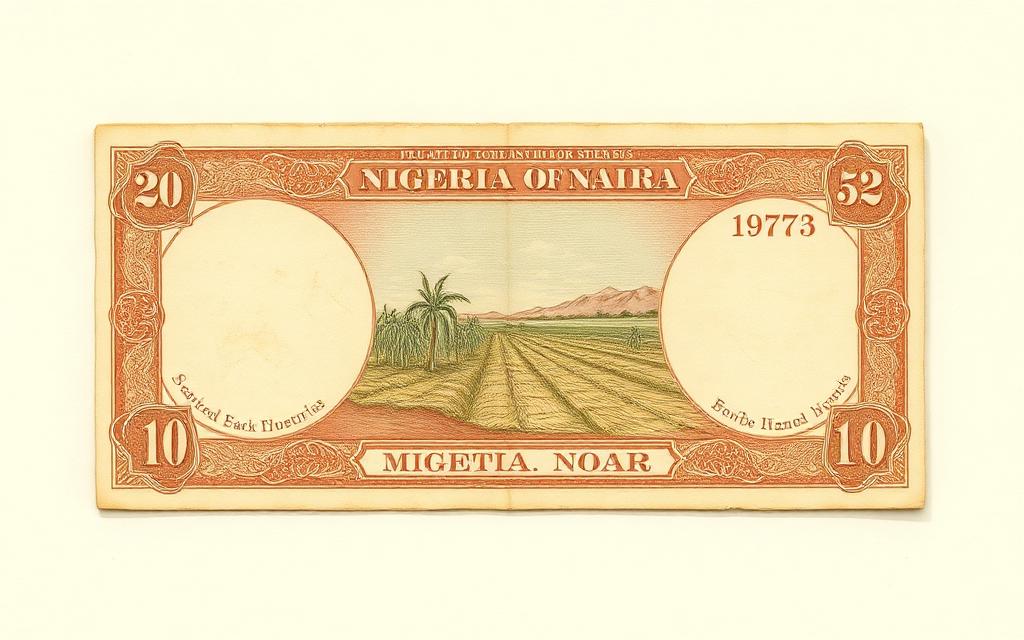
1 January 1973
The first naira
50k, ₦1, ₦5, ₦10 — decimal, agricultural motifs, and no Queen's head. Named by Awolowo, from 'Nigeria'.
What it bought
₦1 in 1973 bought roughly 16 litres of petrol, or twenty loaves of bread.
Worth today
₦1 of 1973 ≈ ₦7,010 in 2026 money.
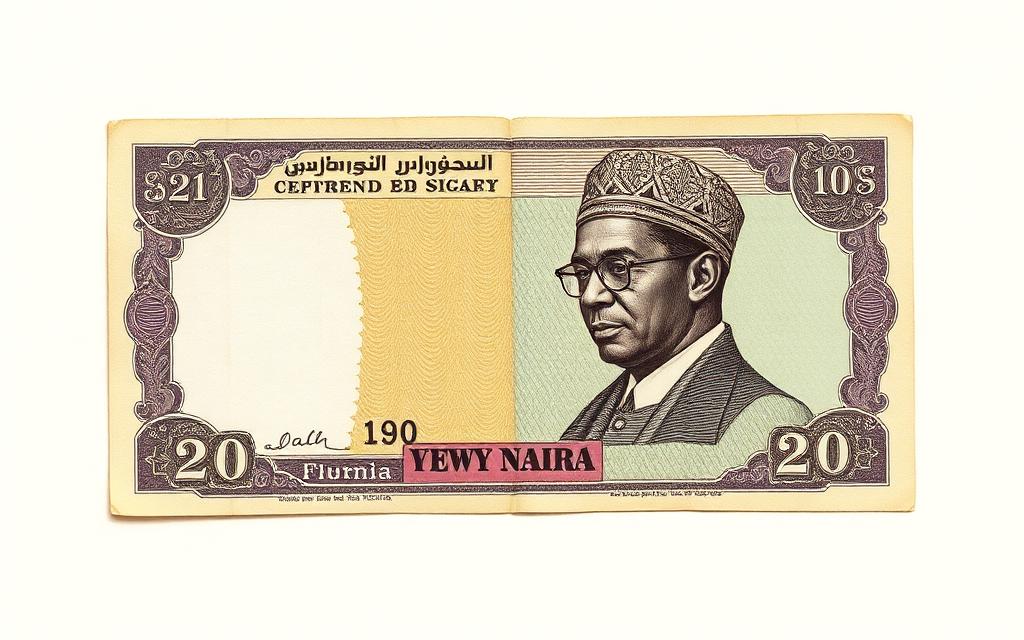
11 February 1977 series; ₦20 issued 1981
₦20
The first Nigerian note to carry a Nigerian face — Murtala Muhammed — and the highest denomination for a decade.
What it bought
₦20 in 1981 was about a week's wage for a junior clerk.
Worth today
₦20 of 1981 ≈ ₦38,000 in 2026 money.
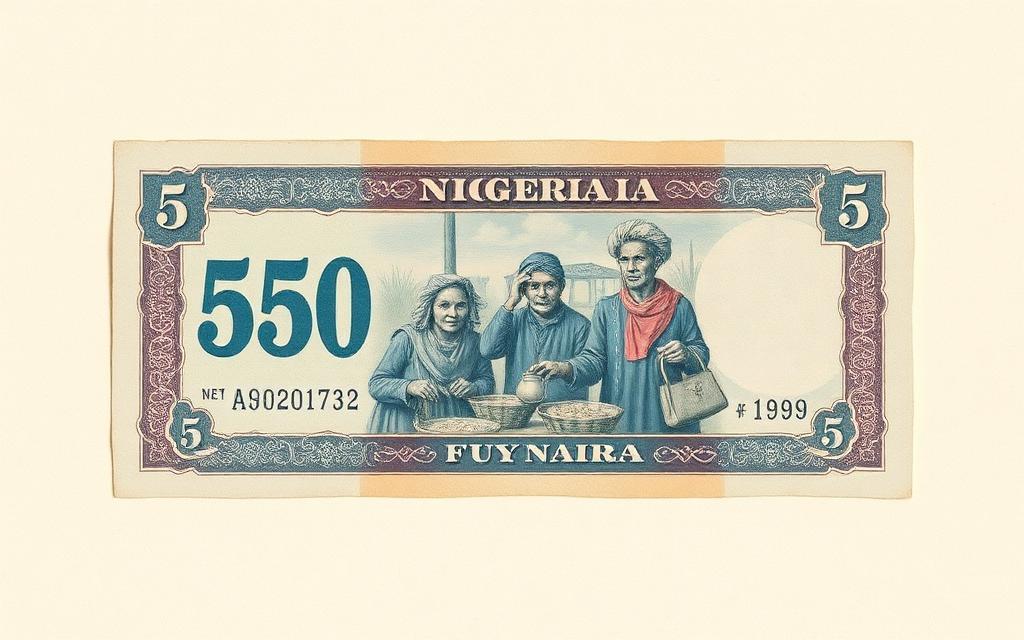
2 December 1991
₦50
Issued the year 50k and ₦1 were demoted to coins — the first formal admission that the low end had died.
What it bought
₦50 in 1991 bought a 25kg bag of rice.
Worth today
₦50 of 1991 ≈ ₦17,800 in 2026 money.
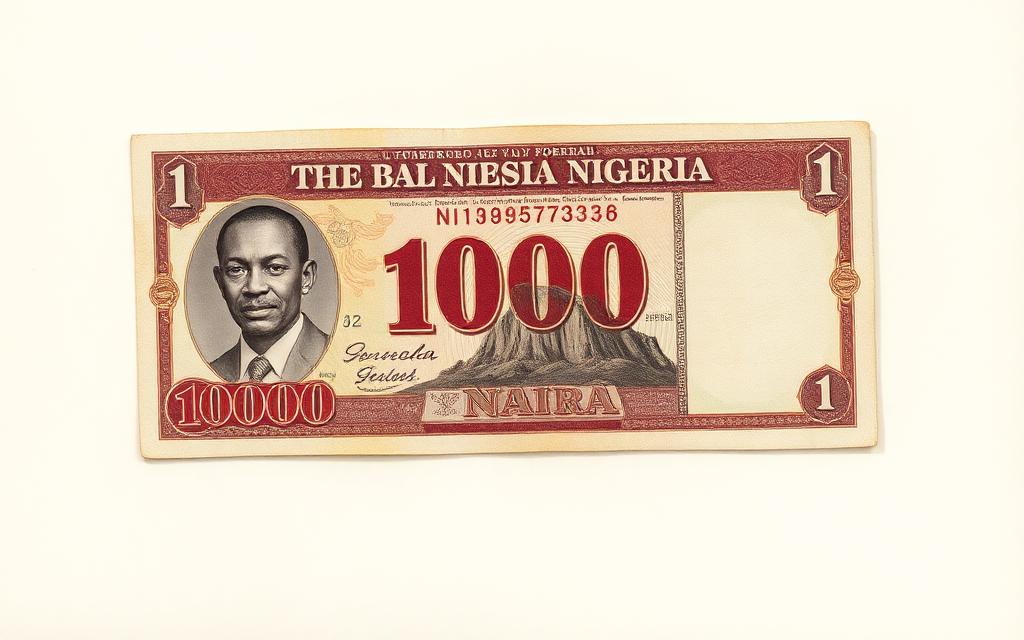
12 October 2005
₦1,000
Aliyu Mai-Bornu and Clement Isong — the first two Nigerian Governors of the Central Bank — on the obverse.
What it bought
₦1,000 in 2005 filled a car's tank with 15 litres to spare.
Worth today
₦1,000 of 2005 ≈ ₦15,800 in 2026 money. It remains the largest note in circulation.