After the oil price collapse of 1981–86, the Babangida regime adopted the IMF-prescribed Structural Adjustment Programme in July 1986. The naira was devalued from a fixed peg of about ₦1.00 = US$1.50 (1980) toward a market-determined rate, eventually trading above ₦20/US$ by 1993. Subsidies on petrol, fertiliser and the social wage were systematically removed. The middle class as measured by real public-sector salaries has never recovered to its 1980 peak. SAP also produced the urban informal economy, the great Pentecostal wave, and the 1989 anti-SAP riots.
Figure 1
Structural Adjustment in numbers, 1985–1995
The Babangida SAP devalued the naira from 0.89 to 78 against the dollar in a decade. Inflation never came back below 10% during the programme.
The money itself
Archival illustrations commissioned for this archive — format, palette and motif of each issue, not a photograph or facsimile.
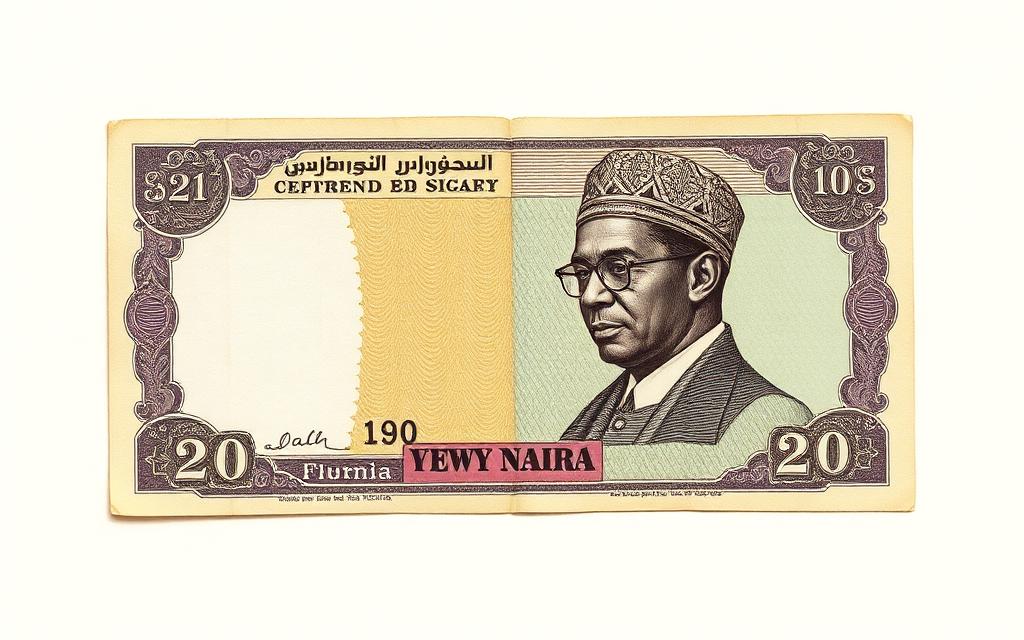
11 February 1977 series; ₦20 issued 1981
₦20
The first Nigerian note to carry a Nigerian face — Murtala Muhammed — and the highest denomination for a decade.
What it bought
₦20 in 1981 was about a week's wage for a junior clerk.
Worth today
₦20 of 1981 ≈ ₦38,000 in 2026 money.
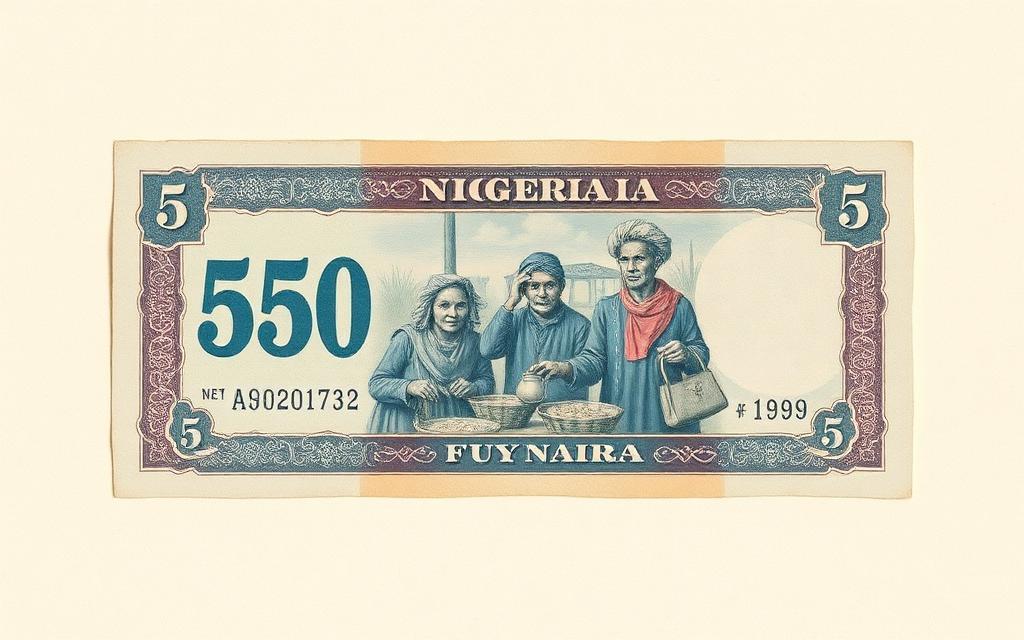
2 December 1991
₦50
Issued the year 50k and ₦1 were demoted to coins — the first formal admission that the low end had died.
What it bought
₦50 in 1991 bought a 25kg bag of rice.
Worth today
₦50 of 1991 ≈ ₦17,800 in 2026 money.