The cowrie (*Cypraea moneta*), bred almost exclusively in the Maldives, was the principal currency of the Bight of Benin, the Bight of Biafra, the Yoruba towns and the Sokoto Caliphate for roughly three centuries. Portuguese, Dutch and English East India ships carried it as ballast — costless to transport — and re-exported it through Lagos, Badagry, Whydah, Bonny, Brass and Calabar at exchange ratios of 1:200 to 1:1,000 between Maldivian source cost and West African purchasing power. Marion Johnson (*Journal of African History*, 1970) put cumulative 19th-century imports at over 10 billion shells. A prime slave at Bonny in the 1780s cost 12,000–16,000 cowries — one 'head'.
Act I — the Zanzibar dump (1845–1870s). British and German firms opened a new supply of the larger East African ring cowrie (*Cypraea annulus*) from Zanzibar and Mozambique and shipped industrial tonnages into Lagos and the Oil Rivers. Hopkins (1966) and Ofonagoro (1979) document a Lagos cowrie-to-sterling collapse of over 80% between 1851 and 1869. This is a textbook colonial-induced hyperinflation — and it landed on a coast already governed by indigenous merchant princes whose entire working capital was denominated in shells.
Act II — the merchant princes fall. The crash explains the conquest sequence that follows. Jaja of Opobo had built Opobo in 1869 precisely to escape the cowrie-rigged Bonny market and trade palm-oil directly for sterling with Liverpool firms. Acting Consul Harry Johnston lured him aboard HMS *Goshawk* on 19 September 1887 under a flag of safe conduct, arrested him, and deported him to St Vincent — not for treaty violation but for refusing the new sterling-denominated trade regime. Nana Olomu of Itsekiri, the last Governor of the Benin River, was the next casualty: the Royal Navy under Admiral Bedford bombarded and destroyed his Ebrohimi compound in September 1894, and Nana was deported to Accra on charges of 'monopolising the palm-oil trade and refusing to open Itsekiri markets to British firms' — that is, of refusing to convert the cowrie economy of the western Delta. Oba Ovonramwen of Benin controlled a hinterland corridor that still ran on pre-sterling pricing; the Phillips mission of January 1897 was a trade-access mission, the Punitive Expedition of February 1897 the punishment, and the looting of the Benin Bronzes the capital extraction. The Aro Confederacy — the largest interior cowrie/credit clearinghouse in the Bight of Biafra — was broken by the Anglo-Aro War of 1 December 1901 – 24 March 1902; the Long Juju at Arochukwu was dynamited on 28 December 1901. In each case the documentary record will cite gun-running, slave trade or treaty violation. The operational truth is monetary: each of these polities was the holdout of a currency the British had already crashed.
Act III — legal demonetisation (1880–1912). What hyperinflation began, statute completed. The Lagos Currency Proclamation of 1880 made the British silver shilling legal tender in Lagos Colony. The Native Revenue Proclamation of 1906 and the Native Revenue Ordinance of 1908 required Lugard's signature instrument of indirect rule — direct tax — to be paid in coin, not in cowries or manillas, forcing every Southern Nigerian household into the cash-crop economy to acquire sterling. The northern emirates, insulated by a parallel Maria Theresa thaler / cowrie economy, were forced onto sterling by the 1903–1911 tax reforms — which is what the Satiru Rising of 1906 was partly about, and why it was put down with disproportionate force (~2,000 killed). The West African Currency Board, established 6 November 1912, completed the sterling monopoly the same decade Lugard completed the 1914 amalgamation. Manillas were tolerated in the Niger Delta until Operation Manilla (1948–49), when the colonial government withdrew 32 million pieces — the largest single demonetisation in West African history before 1984.
The through-line. Hyperinflation → collapse of indigenous merchant capital → coastal middlemen either co-opted (Dosunmu) or deported (Jaja, Nana, Ovonramwen) → interior states forced into sterling via tariffs and tax → military expeditions to enforce the monetary regime → 1914 amalgamation as the administrative capstone. The Royal Niger Company charter was the legal instrument; the cowrie crash was the economic precondition.
This is Nigeria's first documented imported-inflation episode — and arguably the country's first encounter with the politics of currency manipulation, roughly seventy years before the oil-boom naira story. See the Money record entry and the Currency timeline.
The money itself
Archival illustrations commissioned for this archive — format, palette and motif of each issue, not a photograph or facsimile.
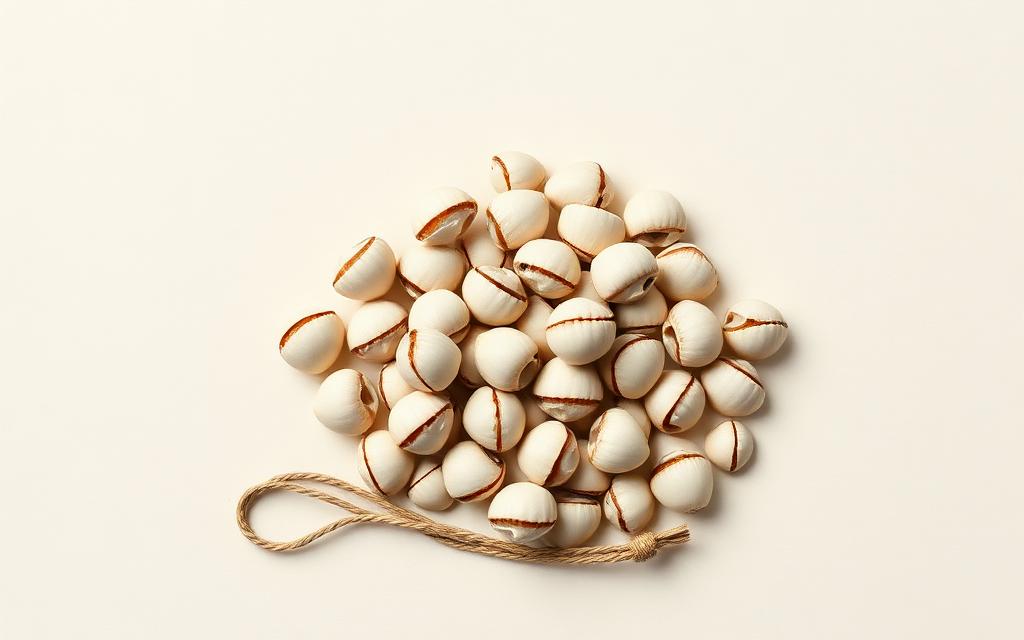
16th century — demonetised 1880–1908
Cowrie shells
Cypraea moneta from the Maldives, shipped as ballast, strung in heads of forty and bags of twenty thousand.
What it bought
A prime slave at Bonny in the 1780s cost 12,000–16,000 shells; a tin of palm oil in the 1850s, 2,000.
Worth today
Extinguished by law, not by inflation — the only Nigerian currency ever abolished outright.
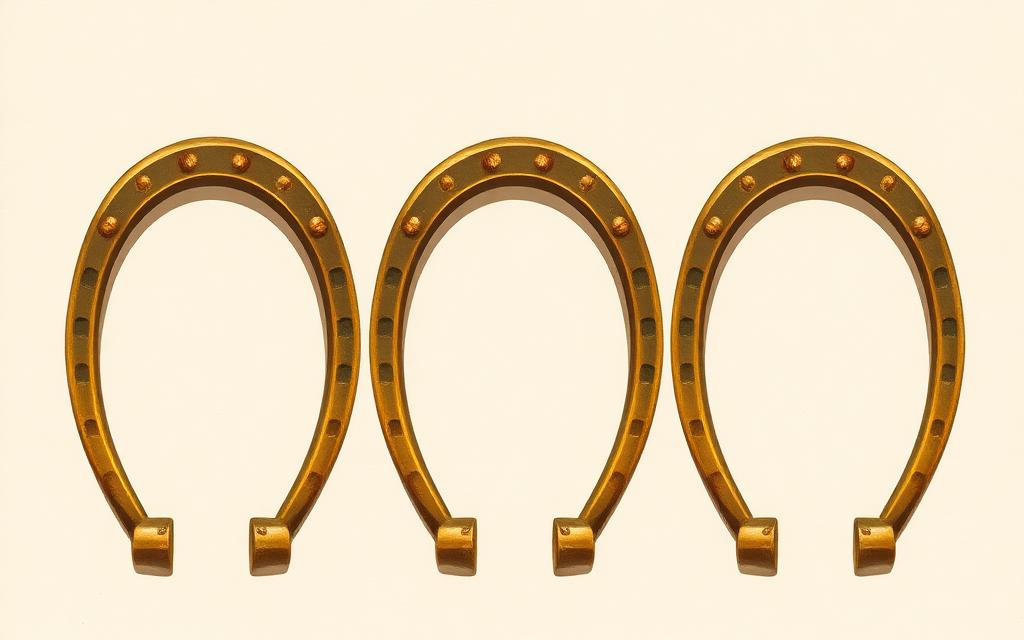
16th century — withdrawn 1948–49
Brass manillas
Horseshoe-shaped brass rings cast in Birmingham and Nantes; six named types, each with its own market rate.
What it bought
Currency of the Niger Delta yam, salt and palm-oil trade for three centuries.
Worth today
32 million pieces bought back in Operation Manilla, 1948–49, at a fixed price below market.
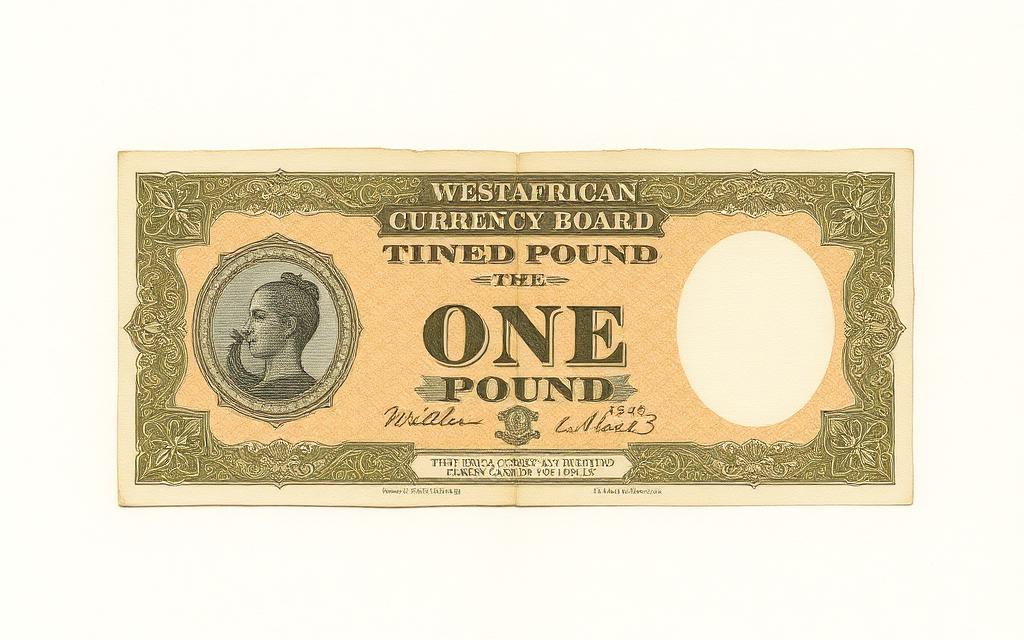
6 November 1912 — 1959
West African pound
Notes and silver coin issued by the West African Currency Board in London, at full sterling parity.
What it bought
A labourer on the Lagos–Kano railway earned about £18 a year in 1914.
Worth today
£1 of 1914 ≈ ₦1.4m in 2026 money, taking Bank of England CPI to 1973 and Nigerian CPI after.