The Republic
All stories

ResistanceeventMay — June 1989· Chapter 96

The Anti-SAP Riots

Students, transport workers and urban poor erupt across the South-West and the East against the Structural Adjustment Programme. Federal soldiers shoot to kill in Lagos, Benin, Port Harcourt.

Listen to this story0:00 / —:—

By 1989 the Structural Adjustment Programme adopted under Babangida in 1986 had collapsed the naira, gutted real public-sector salaries and removed long-standing subsidies on petrol, fertiliser and tertiary feeding. In May and June 1989, university students — initially at the University of Benin — launched anti-SAP demonstrations that spread rapidly across Lagos, Ibadan, Port Harcourt, Onitsha and Benin City, drawing in transport workers, traders and the urban unemployed. The federal government deployed soldiers; the death toll, never officially confirmed, was estimated by Civil Liberties Organisation and other contemporary monitors at between 50 and several hundred. The Babangida administration responded with limited "SAP relief" packages and a partial restoration of student bursaries, but the underlying programme continued. The 1989 riots are one of the earliest large-scale documented uprisings against IMF-prescribed adjustment in Africa.

Figure 1

Structural Adjustment in numbers, 1985–1995

The Babangida SAP devalued the naira from 0.89 to 78 against the dollar in a decade. Inflation never came back below 10% during the programme.

SourceCBN Statistical Bulletin 2024; IMF Article IV 1985–95; NBS Historical CPI series.Last updated 2026-08-12

The money itself

Archival illustrations commissioned for this archive — format, palette and motif of each issue, not a photograph or facsimile.
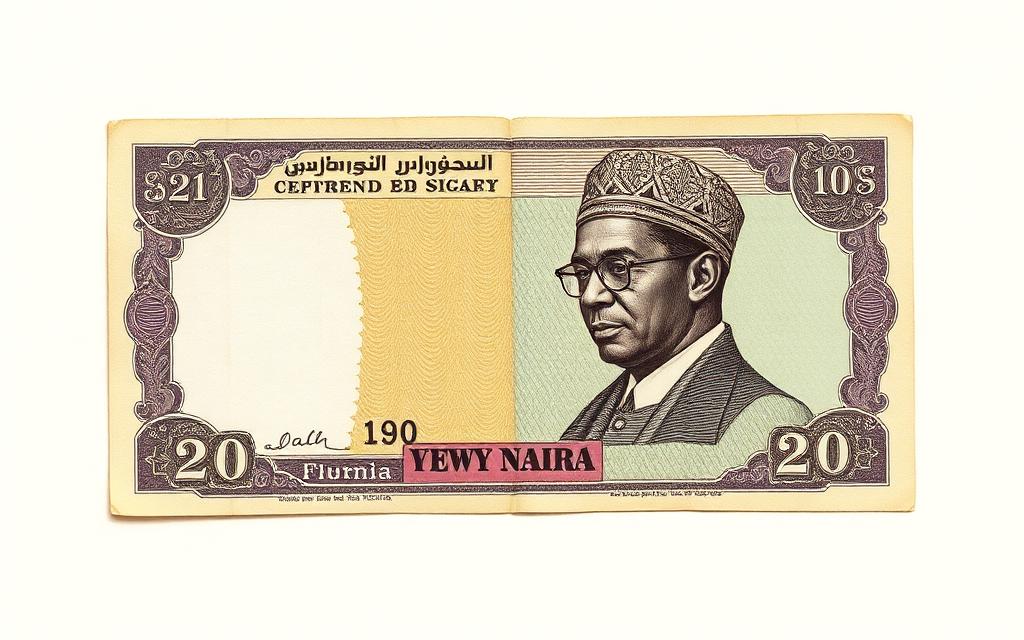
Archival illustration of a 1980s Nigerian twenty naira banknote

11 February 1977 series; ₦20 issued 1981

₦20

The first Nigerian note to carry a Nigerian face — Murtala Muhammed — and the highest denomination for a decade.

What it bought
₦20 in 1981 was about a week's wage for a junior clerk.

Worth today
₦20 of 1981 ≈ ₦38,000 in 2026 money.

Era context

The political and economic reality

The government(s), economy and national reality across the period 1989–1989.

Military President

Gen. Ibrahim Babangida

1985–1993

National reality

Structural Adjustment Programme from 1986 — devaluation of the naira, deregulation, austerity that has, in real terms, never been recovered. Dele Giwa murdered by parcel bomb (1986). Annulled the 12 June 1993 election.

Crises of the period

  • SAP 1986
  • Dele Giwa assassination (1986)
  • Orkar coup attempt (1990)
  • Annulment of June 12, 1993

GDP (World Bank)

$30 bn (1985) → $15 bn (1993, post-SAP devaluation)

Cabinet (selected portfolios)

  • Education

    Prof. A. Babs Fafunwa (1990–92)

  • Finance

    Chu Okongwu; Olu Falae; Kalu Idika Kalu

Sources · Federal Military Government Gazette 1985–93 · CBN

The Republic — Weekly

One article a week. Stories, consorts, records, heroes — on a four-week rotation.

Methodology

Tier 1 · primary

Courts. Gazettes. National archives.

Tier 2 · corroborating

OCCRP. HRW. BudgIT. TheCable.

Tier 4 · tertiary, flagged

Wikipedia only where primary is pending. Always labelled.